From idea to delivery,
in one thread.
Andy turns a one-line request into a planned, reviewed, delivered feature. You make the calls. Andy does the rest.
Backed by

People decide, Andy executes.
Requirements, planning, building, review, and release all happen in one thread.
One task, sliced into six handoffs.
MeetAndy collects the whole task into one thread. The requirement starts here, the plan unfolds here, building and review happen here. The thread itself is the data.
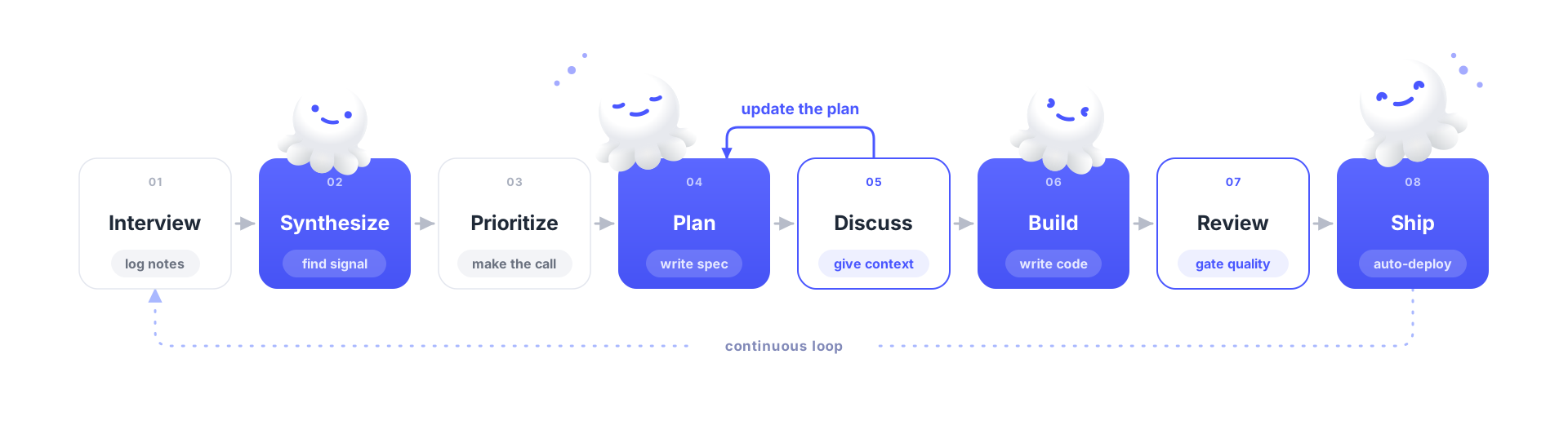
Andy does the work: synthesizes insights, writes the spec, writes code, ships.
The team discusses and adds context; Andy updates the spec from it.
Only the calls that matter stay with people: which insight, whether to ship.
After a discussion, Andy updates the plan and keeps going; after release, the whole flow keeps cycling. People step in only where judgment is needed.
Turn ideas into
production-ready code.
MeetAndy writes a plan for any feature, writes the code, and opens a PR. You stay in control at every step.
Ship features from a single thread.
Track and manage progress all in one thread. Pass off features seamlessly from Product to Engineering.

Every delivery becomes your team's memory.
Context, discussion, plans, and decisions compound into your team's brain. It gets smarter the more you use it.
A day with Andy.
As a Product Owner
- Plan features by asking Andy about existing code, instead of interrupting an engineer
- Turn customer feedback into structured tickets
- Deliver copy, locale, and small UI changes without pulling in an engineer
- Auto-generate release notes from this week's merged PRs
As an Engineer
- Get answers about unfamiliar code in minutes, not half a day
- Save team conventions and decisions to shared memory
- Get Andy to co-review PRs and surface potential issues
- Diagnose production issues with Andy, right in the thread
How teams are using Andy
Answers any codebase question in minutes
Plan across repos without re-explaining context
Move from request to PR without leaving Slack
Deliver a release with the release note already written
Read what was delivered today without anyone writing the update
Answers any codebase question in minutes
Plan across repos without re-explaining context
Move from request to PR without leaving Slack
Deliver a release with the release note already written
Read what was delivered today without anyone writing the update
Hear from our customers
Getting this answer used to mean asking an engineer to dig through code for half a day. I got it in two minutes.
MeetAndy turns code reviews into plain language. Cross-functional collaboration finally feels transparent.
Engineers can help PMs validate requirements directly. The back-and-forth gets a lot shorter.
MeetAndy reads our architecture before suggesting anything. It's like having a consultant in every planning call.
MeetAndy feels more like a colleague. It remembers people, knows our company, and lets everyone work in the same Slack channel without copy-pasting context.
Hand a task to MeetAndy and we keep focus on what matters more. Engineers still own the critical calls, but the unnecessary interruptions are way down.
Reviewing a design used to feel like standing at the foot of a mountain. Now Andy checks UI and UX from the code level, so issues surface during design instead of after.
I used to interrupt our frontend engineers two or three times a day. Each lookup took anywhere from 15 minutes to an hour or two. With Andy I barely need to interrupt them. Most questions get resolved in 30 minutes, and the answers are more precise.
Works inside the tools you already use.




























See Andy run
on your team.
30-minute install on your GitHub and Slack. A two-week pilot tells you if it's worth it.